
در حال بارگذاری…
در حال بارگذاری…
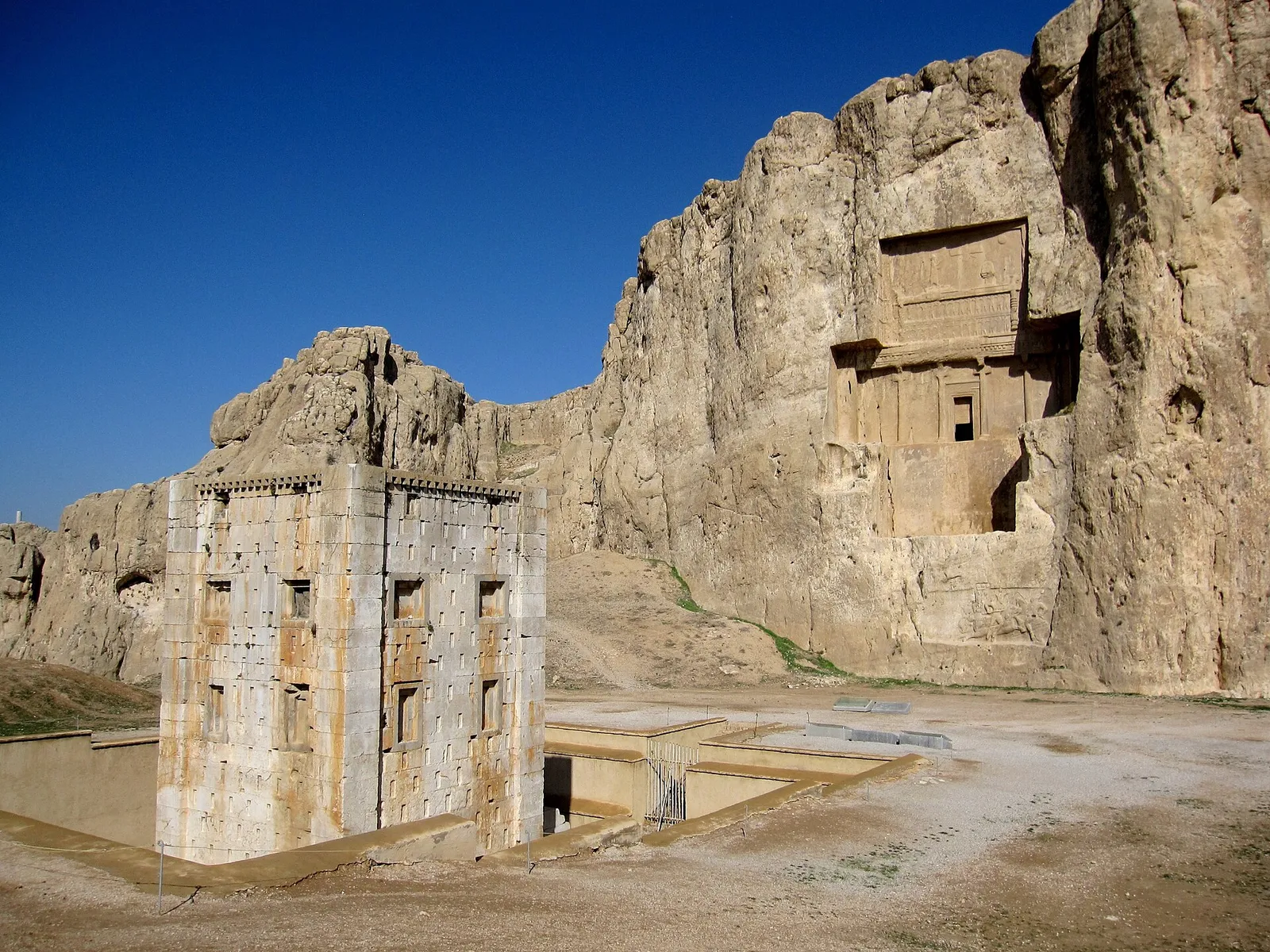
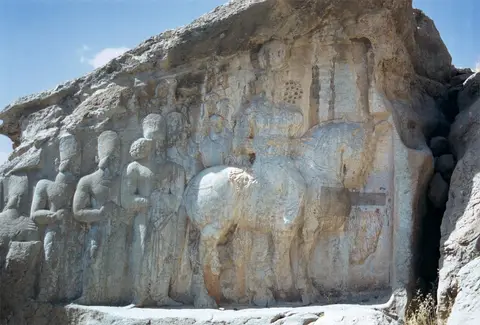
Photo: Stefan Krasowski from New York, NY, USA — CC BY 2.0 — Wikimedia Commons
Near Omidiyeh village, Zangiabad, Marvdasht County
Naqsh-e Rostam is an ancient site at Zangiabad, in the north of Marvdasht County, Fars Province, six kilometres north of Persepolis. Works from three periods, Elamite, Achaemenid and Sasanian, survive side by side on the face of one mountain.
The site mattered from about 1200 BC until 625 AD. Its oldest carving dates from the Elamite period. The tombs were cut into the mountain in the Achaemenid era, and later the Sasanian kings, from Ardashir Babakan on, carved their own reliefs beside them.
It holds the tombs of four Achaemenid kings: Darius the Great, Xerxes, Artaxerxes I and Darius II. The Sasanian kings also carved scenes of their crowning, their battles and their triumphs here on the mountain. In the Sasanian era the site was also of great religious and national importance.
What the Ka'ba-ye Zartosht was used for is still unknown; it was most likely built in the Achaemenid era. The name Naqsh-e Rostam probably came about when people linked the carvings of the Sasanian kings to Rostam, the hero of the Shahnameh. Before that it was called Seh Gonbadan or Do Gonbadan.
🕘 Opening hours
Unknown
🎫 Entry
Unknown
⏱️ Time to spend
About 1.5 hours (typical for this kind of place)
This page is a translation of our Persian guide to this place, where visitors also leave reviews. Last checked: 7 October 2026.