
در حال بارگذاری…
در حال بارگذاری…
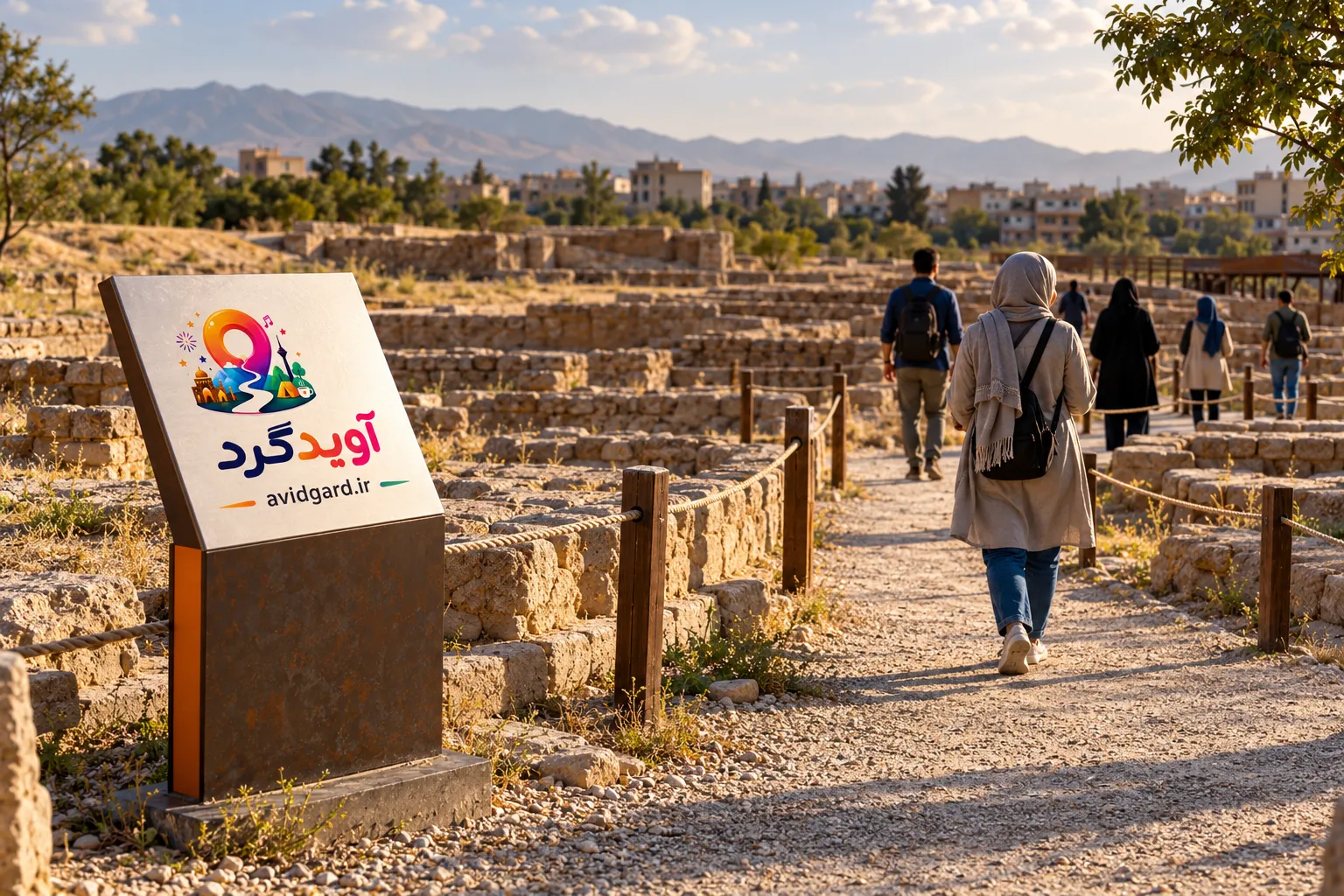
Geoy Tepe village, south-east of Urmia
Geoy Tepe is an archaeological mound in the village of the same name, south-east of Urmia, West Azerbaijan Province. Traces of several periods of human life have been found here; copper tools and painted pottery are among its finds.
The site goes back to prehistoric times. Excavations identified seven periods of settlement, from the Chalcolithic to the Iron Age. Geoy Tepe was added to Iran's National Heritage List in August 1968 and is important for understanding the past of the Urmia plain.
People lived on this site in many different periods. Remains of mud houses, together with tools and vessels, tell of settlement and daily life. Archaeological mounds build up as the remains of one period settle on top of another, and each layer can shed light on part of the past.
Thomas Burton Brown, an English archaeologist from the University of Manchester, excavated Geoy Tepe in 1948. The seven periods of settlement were identified through his work. The site matters not only for the mound you see today but for the layers of life inside it.
🕘 Opening hours
Unknown
🎫 Entry
Unknown
⏱️ Time to spend
About 1.5 hours (typical for this kind of place)
This page is a translation of our Persian guide to this place, where visitors also leave reviews. Last checked: 24 October 2026.